
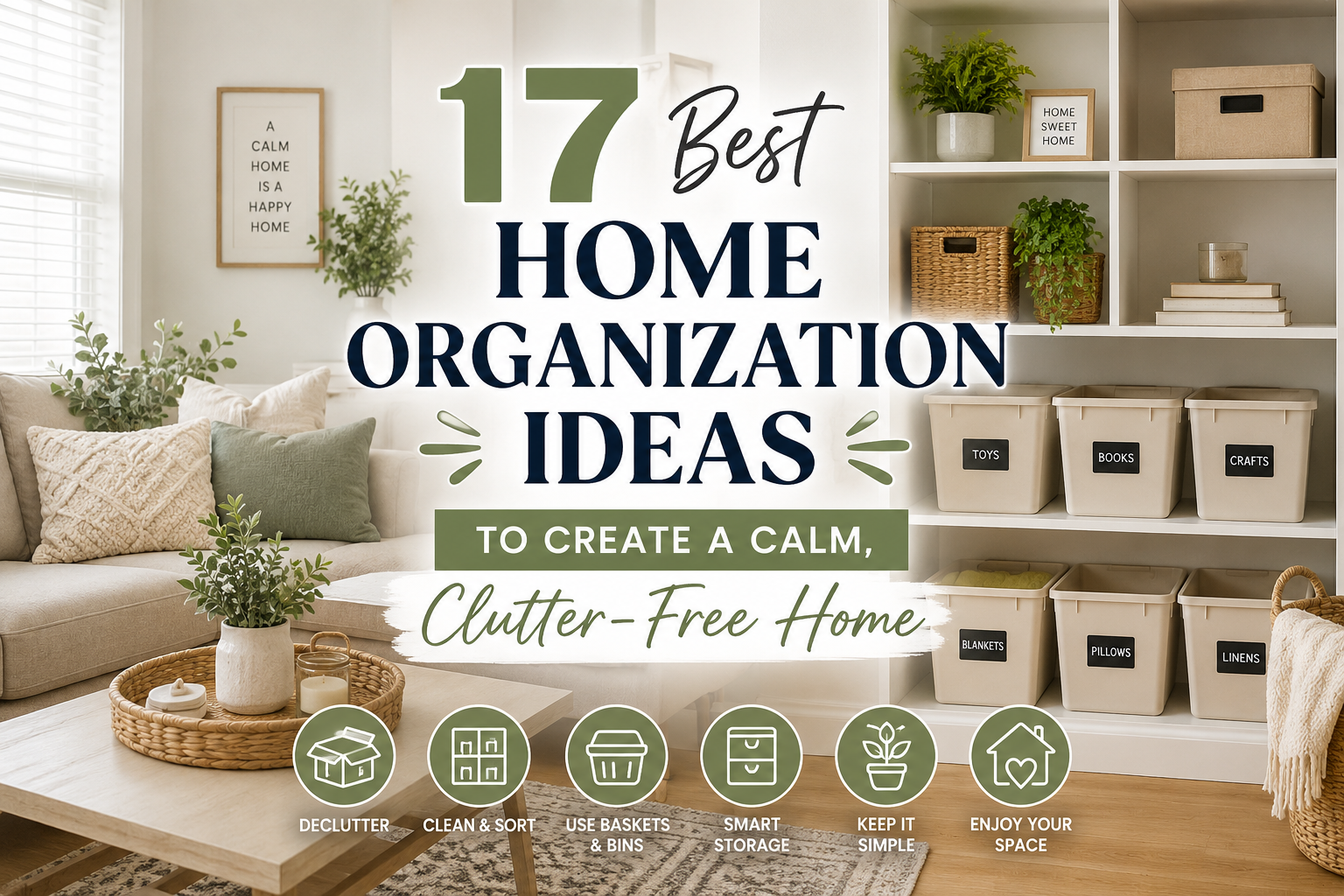
A well-organized home does not have to look perfect. The goal is to create a space where your belongings are easy to find, everyday tasks feel simpler, and unnecessary clutter does not constantly compete for your attention.
The best home organization ideas are practical enough to maintain after the initial cleanup. Instead of trying to organize everything in one weekend, focus on creating simple systems that match the way you actually live. Creating better daily systems can also improve productivity, especially when your environment makes everyday tasks easier.
From organizing your entryway and kitchen to improving your bedroom storage, these home organization ideas can help you make better use of your space without spending a fortune on expensive storage products.
1. Start With One Small Area
One of the biggest mistakes people make when organizing their homes is trying to do everything at once.
Instead, choose one small area.
It could be:
- One kitchen drawer
- A bathroom cabinet
- Your bedside table
- One shelf
- A section of your wardrobe
- The entryway
Finishing a small area gives you visible progress and makes the rest of the project feel easier.
The goal is not to create a perfect home overnight. The goal is to build an organization system you can actually maintain.
2. Declutter Before You Organize
Buying storage containers before removing unnecessary items can create another problem: you end up organizing things you do not need.
Before deciding where something belongs, ask yourself:
- Do I use this regularly?
- Have I used it during the past year?
- Would I buy it again today?
- Do I have something that does the same job?
- Does keeping it genuinely make my life better?
If the answer is no, consider donating, recycling, selling, or responsibly disposing of it. For additional guidance on reducing waste and making better disposal choices, see the U.S. Environmental Protection Agency’s resources on reducing and reusing materials.
Decluttering first makes every other organization step easier.
3. Create a Home for Everything
One of the simplest home organization ideas is giving every frequently used item a specific place.
Keys can have a dedicated bowl or hook. Important documents can have one folder. Cleaning supplies can stay together. Everyday shoes can have a designated location near the entrance.
When something has a home, putting it away requires less thought.
This also makes it easier to notice when something is out of place.
4. Use Vertical Space
When floor space is limited, look upward.
Walls, doors, cabinets, and tall shelving can provide valuable storage without making a room feel smaller.
Consider:
- Wall-mounted shelves
- Tall bookcases
- Over-the-door organizers
- Hanging hooks
- Vertical kitchen storage
- Wall-mounted bathroom storage
This is especially useful for apartments and smaller bedrooms where every square foot matters. While organizing your home, you can also look for practical ways to improve household efficiency with guidance from ENERGY STAR.
5. Simple Home Organization Ideas for Small Spaces
Small homes require organization systems that make every area work harder.
Look for furniture and storage that serve multiple purposes. An ottoman can provide seating and hidden storage. A bed with drawers can replace separate storage furniture. A narrow shelf can use an otherwise empty wall.
For small spaces, avoid filling every available area with containers.
Good organization should create more usable space, not simply add more things.
6. Organize Your Kitchen by Frequency of Use
Your kitchen becomes much easier to use when the items you reach for every day are the easiest to access.
Keep frequently used plates, glasses, pans, and cooking tools within comfortable reach.
Less frequently used items can go higher or farther back in cabinets.
You can also group similar items together:
- Baking supplies
- Spices
- Breakfast foods
- Cooking utensils
- Food storage containers
- Cleaning products
This reduces the time spent searching through cabinets.
7. Make Your Entryway Work for You
The entryway is often where household clutter begins.
Shoes, bags, keys, jackets, mail, and other everyday items can quickly collect near the door.
Create a simple drop zone using:
- A small basket
- Wall hooks
- A shoe rack
- A tray for keys
- A small storage bench
- A mail organizer
The best setup depends on your household. The important thing is that the system gives commonly used items a clear place to go when you arrive home. “One of the most useful home organization ideas is creating a simple drop zone near the entrance.”
8. Organize Your Wardrobe by Category
Instead of randomly placing clothes throughout your wardrobe, create simple categories.
For example:
- T-shirts
- Shirts
- Trousers
- Jeans
- Dresses
- Jackets
- Sportswear
- Seasonal clothing
You can also arrange clothing by color within each category if that makes choosing outfits easier.
The system does not have to look like a showroom. It simply needs to help you find what you need quickly. These home organization ideas also work well when your wardrobe starts feeling overcrowded.
9. Keep Everyday Items at Eye Level
One useful organization principle is to keep frequently used items where you can easily see and reach them.
Items used every day should generally receive the easiest storage locations.
Items used once a year do not need the best shelf in the house.
This simple change can make cabinets, wardrobes, bathrooms, and kitchens much more convenient.
10. Use Containers Only When They Solve a Problem
Storage boxes and baskets can be helpful, but more containers are not always better.
Before buying one, decide what problem it will solve.
A container can make sense when it:
- Groups small items together
- Prevents a drawer from becoming messy
- Makes a shelf easier to use
- Keeps similar products together
- Makes frequently used items easier to access
Avoid buying containers simply because they look attractive.
Organization should improve functionality first.
11. Create a Bathroom Routine Zone
Bathrooms often become cluttered because many products are used at different times of the day.
Instead of keeping everything together, organize products according to your routine.
For example, keep your everyday morning products together and place less frequently used items somewhere else.
You can also use small trays or baskets for skincare, hair products, or grooming essentials.
This makes your morning routine faster and reduces visual clutter.
12. Give Important Documents One Location
Paperwork can become difficult to manage when documents are scattered across different rooms.
Create one dedicated document system.
You might separate papers into categories such as:
- Personal documents
- Financial records
- Home information
- Insurance
- Receipts
- Important warranties
For sensitive documents, use secure storage rather than leaving them in an easily accessible location.
A simple filing system can save considerable time when you need an important document later.
13. Organize Around Your Daily Routine
Some of the most useful home organization ideas are based on behavior rather than appearance.
Think about what you do every morning and evening. A well-planned morning routine can also make it easier to start the day with less stress and fewer unnecessary decisions.
If you always prepare coffee in the morning, keep the equipment and frequently used ingredients together.
If you regularly pack a work or school bag, create a dedicated area for it.
If you exercise before work, keep your workout essentials together.
Organizing around routines means your home supports the way you actually live.
Current 2026 home organization trends are also moving toward systems built around routines and intentional ownership rather than simply trying to own as little as possible.
14. Create a Weekly Reset
You do not need to completely reorganize your home every week.
Instead, spend 15–30 minutes resetting the main areas.
You can:
- Return misplaced items.
- Clear kitchen surfaces.
- Put away clean clothes.
- Empty unnecessary bags.
- Sort incoming paperwork.
- Check the entryway.
- Remove obvious rubbish.
A small weekly reset can prevent clutter from becoming a much larger project.
15. Make Your Bedroom Easier to Maintain
Your bedroom should be easy to reset at the end of the day.
Keep surfaces relatively clear and make sure frequently used items have obvious storage locations.
A simple bedroom organization system might include:
- A laundry basket
- Bedside storage
- Wardrobe categories
- Under-bed storage
- A designated place for accessories
- A small tray for everyday items
The less effort required to put something away, the more likely you are to keep the system working.
16. Use the One-In, One-Out Rule
When your home is becoming crowded, try a simple rule: when you bring in something new, consider removing something similar.
For example, if you buy a new jacket, look through your existing jackets and decide whether one is no longer useful.
The same principle can apply to:
- Shoes
- Kitchen equipment
- Books
- Home decor
- Bags
- Clothing
This approach can help prevent your possessions from growing faster than your available storage.
17. Make Organization Personal
Your home does not need to look like a picture from a magazine.
The best organization system is one that works for you. This idea fits into a broader approach to lifestyle design, where your surroundings and habits are shaped around the way you want to live.
Some people prefer open shelves because they like seeing everything. Others prefer closed cabinets because they want a cleaner visual appearance.
Some people love detailed labels. Others find labeling unnecessary.
There is no single perfect system.
The important thing is to understand how you use your home and create storage around those habits.
Common Home Organization Mistakes to Avoid
Even good organization systems can fail when they are too complicated.
Here are some common mistakes to avoid:
Buying too many storage products:
Storage does not solve the problem if you have too many unnecessary possessions.
Trying to organize the entire house at once:
Large projects can quickly become overwhelming. Start with one manageable area.
Creating complicated systems:
If putting something away requires several steps, you may stop using the system.
Ignoring your daily habits:
A beautiful system will not work if it does not match your routine.
Keeping everything perfectly arranged:
A home is meant to be lived in. Organization should make life easier rather than create another source of pressure.
How to Keep Your Home Organized Long-Term
Creating an organized home is only the first step. Maintaining it is what makes the difference.
Try these habits:
- Put items away after using them.
- Do a quick evening reset.
- Regularly review cluttered areas.
- Avoid unnecessary purchases.
- Return borrowed items.
- Donate things you no longer use.
- Adjust storage when your lifestyle changes.
You do not have to maintain perfection.
A realistic system that works most of the time is much better than an impressive system that becomes impossible to maintain.
Final Thoughts
The most effective home organization ideas are not necessarily the most expensive or complicated ones. Often, simple changes make the biggest difference.
Start by removing things you no longer need, give frequently used items a clear home, use available vertical space, and organize your rooms around your daily routines.
Most importantly, remember that organization should serve your lifestyle. Your home does not need to be perfect. It simply needs to work better for you.
Start with one drawer, one shelf, or one room today. Once that small area becomes easier to manage, move on to the next.