
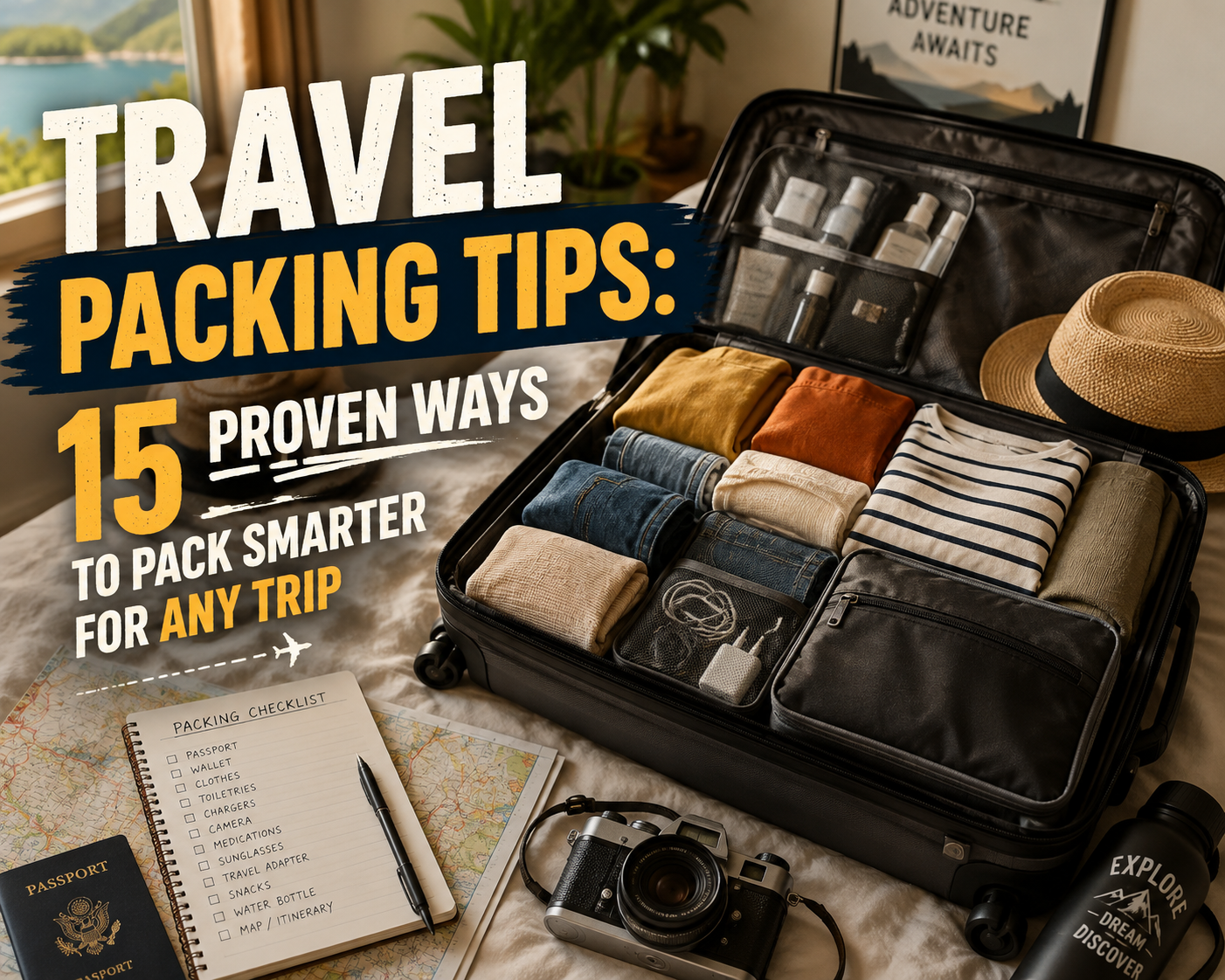
Packing for a trip sounds easy until you are standing in front of an open suitcase wondering whether you really need three pairs of shoes, five outfits, and a jacket you probably will not wear.
The truth is that good packing is less about taking everything you might possibly need and more about choosing the right things. A well-organized suitcase can save space, reduce stress, make airport travel easier, and help you spend less time searching for your belongings once you arrive.
Whether you are planning a weekend getaway, an international vacation, a business trip, or a longer adventure, these travel packing tips will help you prepare your luggage more efficiently without sacrificing the essentials.
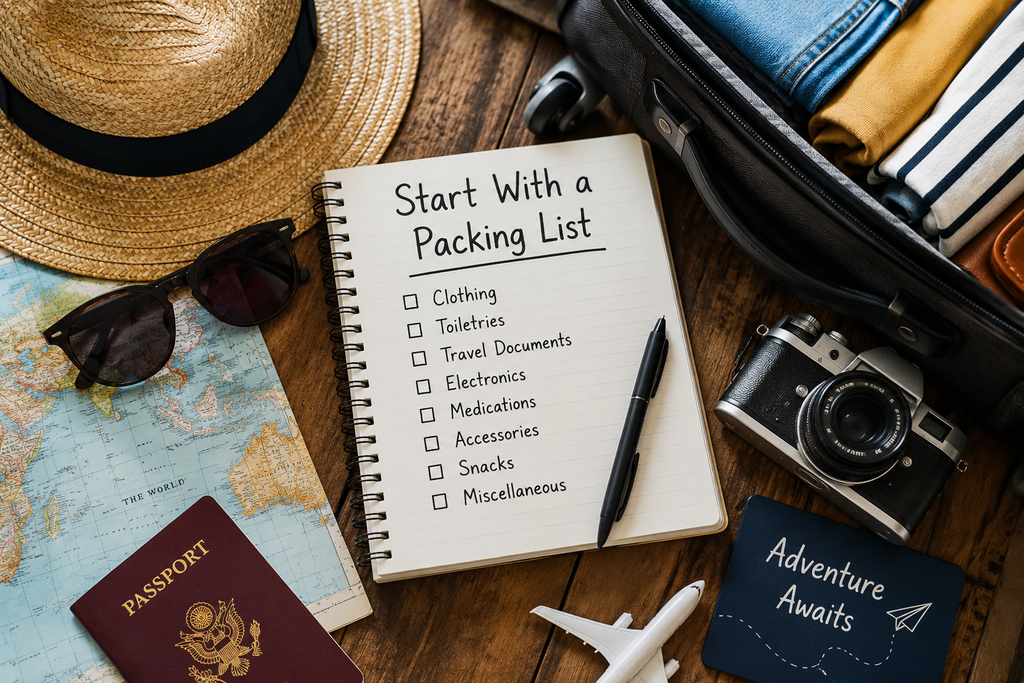
1. Start With a Packing List
One of the simplest ways to avoid packing mistakes is to create your list before opening your suitcase.
Write down everything you think you need and divide it into categories such as clothing, toiletries, electronics, documents, medications, and miscellaneous items.
Once the list is complete, go through it again and remove anything that you probably will not use.
A packing list also helps prevent the opposite problem: forgetting something important because you were focused on fitting everything into your bag.
Keep your list on your phone so you can reuse it for future trips.
2. Check Your Destination Before Packing
Your destination should determine what you pack.
A beach vacation requires very different clothing from a winter city break. A hiking trip may require specialized footwear, while a business trip might require formal clothing.
Before packing, check:
- Expected weather
- Local customs
- Planned activities
- Dress requirements
- Accommodation facilities
- Transportation
- Trip length
Do not pack for an imaginary trip. Pack for the trip you are actually taking.
For international travel, also check passport validity and visa requirements before leaving. Travel requirements can change, so verify current rules with the relevant official authorities before departure. Lonely Planet also recommends checking passport validity and visa conditions as part of predeparture preparation.
3. Plan Outfits Instead of Packing Random Clothes
One of the biggest causes of overpacking is putting individual clothing items into a suitcase without thinking about how they will work together.
Instead, plan outfits.
For example, choose several tops that can be worn with the same two or three pairs of trousers or shorts. This gives you more combinations without requiring a huge wardrobe.
A simple color palette can make this even easier. If you’re also trying to keep your trip affordable, these budget travel hacks can help you save money before and during your journey.
Neutral colors such as black, white, gray, navy, beige, and denim can usually be mixed and matched easily.
This approach allows you to create more outfits while carrying fewer pieces.
4. Follow the One-Week Clothing Rule
If you are traveling for two weeks, you do not necessarily need two weeks’ worth of clothing.
For many trips, packing approximately one week’s worth of versatile clothing and doing laundry during the trip can significantly reduce luggage.
This works especially well when your accommodation has laundry facilities or you are comfortable washing a few lightweight items yourself.
Packing light is easier when you stop thinking about every day as requiring a completely different outfit.
5. Choose Shoes Carefully
Shoes are among the heaviest and bulkiest items in most suitcases.
Before adding another pair, ask yourself:
Will I actually wear these?
For many trips, two or three versatile pairs are enough.
Wear your heaviest shoes while traveling and pack lighter footwear inside your luggage.
For example, you might choose:
- Comfortable walking shoes
- Sandals or casual shoes
- One dressier option when necessary
Your exact choices should depend on your destination and planned activities.
The goal is not to own fewer shoes. It is to avoid carrying shoes that never leave your suitcase.
6. Use Packing Cubes to Stay Organized
Packing cubes can divide your suitcase into smaller sections.
You can use one cube for shirts, another for trousers, another for underwear, and another for accessories.
They are particularly useful when you move between hotels because you can remove one cube instead of unpacking your entire suitcase.
Packing cubes do not magically create unlimited luggage space, but they can make your belongings easier to organize and access. Travel experts also recommend using organized packing systems to make luggage easier to manage.
7. Roll Some Clothes Instead of Folding Everything
Rolling lightweight clothing can be useful when you are trying to maximize suitcase space.
T-shirts, casual tops, pajamas, and some lightweight trousers can often be rolled neatly.
However, you do not need to roll every item.
Delicate clothing, structured garments, and items that wrinkle easily may be better folded carefully.
The best method is the one that keeps your clothes organized and protects them from unnecessary wrinkles.
8. Keep Important Items in Your Carry-On
Never put everything important into checked luggage.
Your carry-on should contain the essentials you would need if your checked bag were delayed.
Consider keeping these items with you:
- Passport
- Travel documents
- Wallet
- Phone
- Chargers
- Essential medication
- Valuables
- Basic toiletries
- A change of clothes
Keep digital copies of important documents as an additional backup.
For air travel, always check the current baggage and security requirements for your airline and departure airport.
9. Organize Liquids Before You Leave
Toiletries can create unnecessary weight and take up surprising amounts of space.
Instead of carrying full-size bottles, consider using appropriately sized travel containers when permitted.
Group liquids together in an easily accessible bag so you can find them quickly.
If you are flying from a location where the TSA rules apply, the TSA currently advises travelers that carry-on liquids, gels, and aerosols must follow its 3-1-1 requirements. Check the current rules for your airport and airline before packing because security requirements can vary by location.
10. Pack Electronics Strategically
Electronics can quickly turn a simple suitcase into a tangled collection of cables.
Create one small electronics pouch containing items such as:
- Phone charger
- Power bank
- Charging cables
- Headphones
- Travel adapter
- Memory cards
- Other necessary accessories
Before leaving, charge your devices and make sure you actually need every gadget you plan to bring.
If you are traveling internationally, check whether you need a plug adapter or voltage converter for your destination.
11. Leave Some Space in Your Suitcase
Do not pack your suitcase until it is completely full.
Leaving some extra space gives you flexibility.
You may buy souvenirs, clothing, gifts, snacks, or other items during your trip.
An overstuffed suitcase can also become difficult to close and may make you exceed your airline’s baggage allowance.
A little empty space is not wasted space. It can make the return journey much easier.
12. Keep a Small Travel Essentials Bag
Create a small bag containing the things you frequently need while traveling.
Depending on your trip, it could include:
- Tissues
- Hand sanitizer
- Earplugs
- Eye mask
- Pen
- Small snacks
- Charging cable
- Travel documents
Keeping these items together means you do not have to search through your main luggage every time you need something.
13. Protect Your Valuables
Do not place valuable items randomly inside checked luggage.
Keep important documents, money, electronics, and other valuables in a secure place according to your travel situation and airline rules.
You should also avoid carrying unnecessary valuables in the first place.
Before leaving home, ask yourself whether you really need an expensive watch, extra jewelry, or another device.
The safest valuable is often the one you decided not to bring.
14. Weigh Your Luggage Before Leaving
One of the most practical travel packing tips is also one of the easiest: weigh your luggage before heading to the airport.
Airlines can have different baggage allowances and fees, so check your specific airline’s current policy.
A luggage scale can help you identify an overweight bag before you reach the airport.
If your suitcase is too heavy, remove items or redistribute them between permitted bags.
This small step can prevent an unpleasant surprise at check-in.
15. Do a Final 10-Minute Packing Check
Before closing your suitcase, stop for ten minutes and perform one final check.
Ask yourself:
Do I have my passport?
Do I have my wallet and payment cards?
Do I have my phone and charger?
Do I have my required medication?
Do I have the documents I need?
Did I check the weather?
Did I pack clothing appropriate for my activities?
Is my luggage within the permitted weight and size?
This final check can catch the items that are easiest to forget.
A Simple Travel Packing Checklist
Before leaving home, use this quick checklist:
Travel documents
- Passport
- Visa or entry documents when required
- Tickets or booking information
- Travel insurance details
- Copies or digital backups of important documents
Clothing
- Tops
- Bottoms
- Underwear
- Socks
- Sleepwear
- Jacket or layers
- Appropriate footwear
Toiletries
- Toothbrush
- Toothpaste
- Deodorant
- Skincare products
- Hair products
- Other personal essentials
Electronics
- Phone
- Charger
- Power bank
- Headphones
- Travel adapter if needed
Personal essentials
- Wallet
- Medication
- Sunglasses
- Reusable water bottle
- Small day bag
Remember that your exact packing list should change according to your destination, season, activities, and trip length.
Common Packing Mistakes to Avoid
Even experienced travelers can make packing mistakes.
The most common one is packing based on “what if” situations.
What if it rains? What if I need formal clothes? What if I suddenly want to go hiking?
Some preparation is sensible, but packing for every possible scenario can leave you carrying a suitcase full of things you never use.
Another mistake is forgetting to check baggage restrictions.
Different airlines can have different weight and size limits, so never assume your luggage allowance is the same for every trip.
Finally, avoid packing at the last minute.
Starting early gives you time to check documents, wash clothes, charge electronics, organize medications, and remove unnecessary items.
Final Thoughts
Good packing is not about fitting your entire life into a suitcase. It is about making thoughtful decisions before you leave.
The best travel packing tips are simple: make a list, understand your destination, plan versatile outfits, limit your shoes, organize your luggage, protect your important items, and check baggage requirements before heading to the airport.
Once you develop a packing system that works for you, preparing for a trip becomes much faster.
The goal is to arrive at your destination with everything you genuinely need—and without carrying a suitcase full of things you never use.
Pack smarter, travel lighter, and leave more room for the experiences that actually matter.