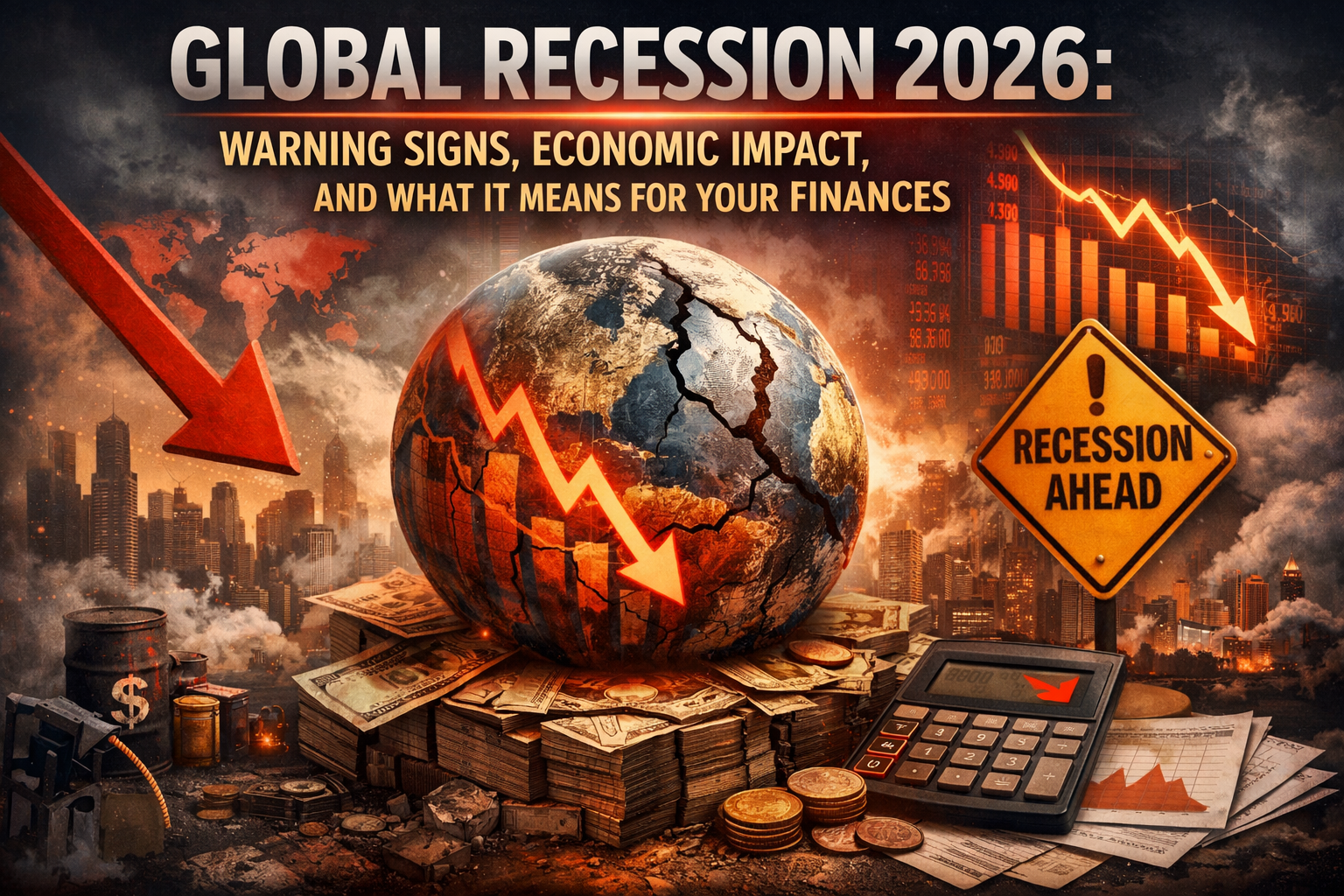
Economic uncertainty is once again dominating global headlines. Financial analysts, central banks, and global institutions are raising concerns about a potential Global Recession 2026. Rising inflation, geopolitical tensions, high interest rates, and slowing economic growth have sparked fears that the world economy may be heading toward another downturn.
But how serious are these concerns? And more importantly, what does a potential recession in 2026 mean for businesses, investors, and everyday individuals?
Let’s break it down.
What Is a Global Recession?
A global recession occurs when multiple major economies experience a significant decline in economic activity for an extended period. This often includes:
- Negative GDP growth
- Rising unemployment
- Declining consumer spending
- Reduced business investments
- Financial market volatility
Unlike a regional slowdown, a global recession impacts trade, financial systems, and employment worldwide.
Why Are Experts Warning About Global Recession 2026?
Several warning signs are raising red flags:
1. Persistent Inflation Pressures
Although inflation has slowed in some regions, prices remain higher than pre-pandemic levels. Central banks continue maintaining higher interest rates to control inflation, which can slow economic growth.
High borrowing costs affect:
- Home loans
- Business expansion
- Consumer credit
- Investment activity
When borrowing slows, economic growth often follows.
2. Slowing GDP Growth
Major economies are reporting slower growth forecasts for 2026. Export-driven nations are seeing reduced demand due to global uncertainty.
A slowdown in large economies can trigger a chain reaction across global trade markets.
3. Geopolitical Instability
Ongoing geopolitical conflicts and trade tensions are disrupting supply chains. Energy markets remain volatile, and global trade agreements face uncertainty.
Political instability often contributes to economic hesitation among investors.
4. Weak Consumer Confidence
Consumers are spending more cautiously due to higher living costs. When consumer spending declines, businesses generate lower revenue, leading to reduced hiring and investment.
Impact of Global Recession 2026 on Businesses
Small Businesses
Small businesses are typically hit hardest during recessions. Challenges include:
- Lower consumer demand
- Limited access to credit
- Increased operating costs
Businesses without strong cash reserves may struggle to survive prolonged downturns.
Large Corporations
Major corporations may:
- Reduce workforce
- Delay expansion plans
- Cut operational costs
- Slow innovation spending
Stock prices often fluctuate significantly during economic uncertainty.
Online and Digital Businesses
Interestingly, some online businesses may see growth opportunities during a recession.
For example:
- Freelancing platforms
- Remote work services
- Budget-focused e-commerce
- Online education platforms
Digital businesses with low overhead may be more resilient.
What Happens to Jobs During a Recession?
One of the biggest concerns surrounding Global Recession 2026 is unemployment.
When companies experience lower profits, they may:
- Freeze hiring
- Lay off workers
- Reduce hours
- Automate tasks
Industries most at risk often include:
- Real estate
- Retail
- Manufacturing
- Hospitality
However, essential sectors like healthcare and utilities tend to remain more stable.
Financial Markets and Investment Risks
During a recession, financial markets often experience volatility.
Investors may see:
- Stock market corrections
- Lower asset values
- Increased bond market activity
- Safe-haven investments rising (like gold)
Market downturns can be stressful, but they also create long-term investment opportunities for strategic investors.
How Individuals Can Prepare for Global Recession 2026
Preparation is key. Here are practical steps:
1. Build an Emergency Fund
Financial experts recommend saving at least 3–6 months of expenses.
2. Reduce Debt
High-interest debt becomes harder to manage during economic downturns.
3. Diversify Income
Side hustles, freelancing, or online businesses can provide financial stability.
4. Avoid Panic Investing
Market drops can tempt emotional decisions. Long-term strategies often outperform panic selling.
Will Global Recession 2026 Be Severe?
Predicting the severity of a recession is difficult. Economists suggest several possible scenarios:
- Mild slowdown with quick recovery
- Moderate recession lasting 12–18 months
- Severe global downturn with long-term impact
Much depends on central bank policies, inflation control success, and geopolitical developments.
Historical Comparison: Lessons from Past Recessions
Looking at previous economic downturns provides perspective:
- The 2008 Financial Crisis led to global banking reforms.
- The 2020 pandemic recession accelerated digital transformation.
Each recession reshapes industries and creates new economic trends.
Potential Opportunities During a Recession
While recessions bring challenges, they also create opportunities:
- Innovation in cost-saving technologies
- New business models
- Lower asset purchase prices
- Entrepreneurial growth
Many successful companies were launched during economic downturns.
FAQ Section
What causes a global recession?
A global recession is typically caused by a combination of high inflation, interest rate increases, declining consumer demand, and geopolitical instability.
Is Global Recession 2026 confirmed?
No official confirmation exists, but economic indicators suggest increased risk.
How long do global recessions last?
Most recessions last between 6 months to 2 years, depending on severity.
Should I invest during a recession?
Investment decisions depend on risk tolerance. Long-term strategies often benefit from market corrections.
Final Thoughts
Global Recession 2026 concerns are growing, but uncertainty does not guarantee disaster. Economic cycles are natural, and downturns often lead to stronger recoveries.
For businesses, adaptability is crucial. For individuals, preparation is essential. Monitoring economic signals while maintaining financial discipline can reduce risk and create opportunities.
The coming year may bring challenges, but informed decision-making remains the best defense against economic uncertainty.