
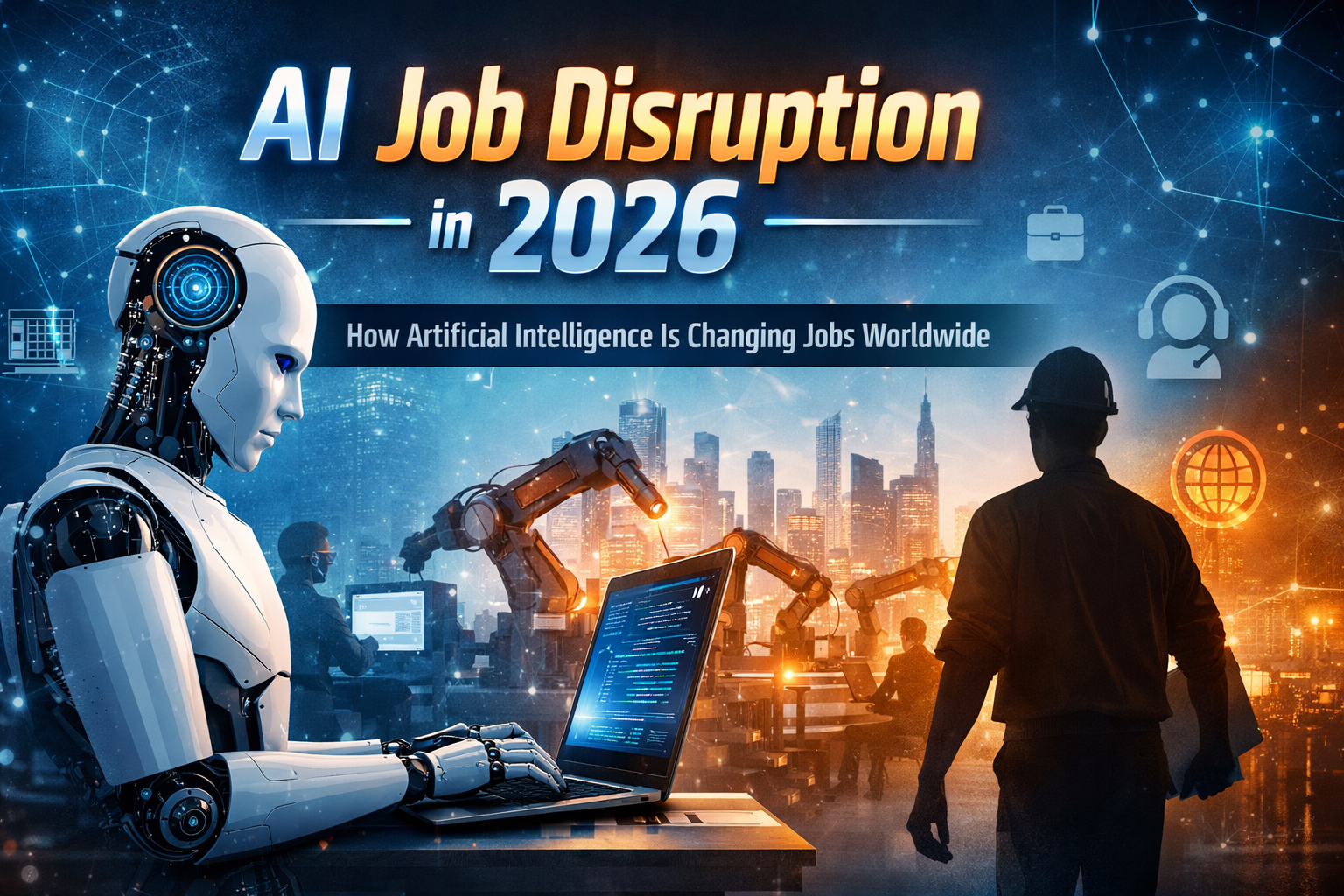
Artificial intelligence has rapidly become one of the most transformative technologies of the modern era. Across industries, businesses are adopting advanced automation systems, machine learning tools, and intelligent software to improve productivity and efficiency. While these innovations offer many benefits, they are also contributing to a major AI job disruption that is reshaping the global workforce.
In 2026, organizations worldwide are adjusting to a new reality where human workers collaborate with intelligent machines. This shift has sparked debates about the future of employment, workplace skills, and the role technology will play in shaping careers.
Experts believe that understanding the impact of AI job disruption is essential for workers, businesses, and policymakers who want to prepare for the future economy.
The Rapid Rise of Artificial Intelligence in the Workplace
The growth of artificial intelligence has accelerated dramatically over the past few years. Technology companies such as OpenAI, Google, and Microsoft are investing billions of dollars into AI development.
These systems can now perform tasks that once required human intelligence, including:
- data analysis
- language translation
- customer service interactions
- software development assistance
- automated decision-making
As AI capabilities expand, businesses are increasingly integrating these tools into their operations. This technological evolution is one of the key drivers behind the growing AI job disruption affecting workers around the world.
Industries Experiencing the Biggest AI Job Disruption
Although artificial intelligence is influencing nearly every industry, some sectors are experiencing particularly significant changes.
Technology and Software Development
AI coding assistants and automated development platforms are helping engineers write software faster than ever before. While these tools increase productivity, they also reduce the need for certain routine programming tasks.
Major technology companies such as OpenAI are leading the development of artificial intelligence systems that can assist with writing, coding, data analysis, and many other professional tasks.
Customer Service
Chatbots and virtual assistants powered by AI are transforming customer support systems. Many companies now use automated solutions to handle common customer questions, reducing the demand for large call center teams.
Finance and Banking
Financial institutions are using AI algorithms to detect fraud, analyze market trends, and automate financial reporting. This technology is improving accuracy but also contributing to AI job disruption in traditional banking roles.
Automation and the Changing Nature of Work
One of the most significant effects of AI adoption is the rise of workplace automation. Repetitive tasks that once required human effort can now be performed by intelligent systems.
Examples include:
- automated data entry
- AI-powered logistics management
- predictive maintenance in manufacturing
- smart inventory management
Automation does not necessarily eliminate all jobs, but it does change the nature of work. Many roles are evolving to focus more on creativity, strategic thinking, and complex problem-solving.
This shift highlights how AI job disruption is transforming the skills that employers value most.
New Opportunities Created by Artificial Intelligence
Despite concerns about job losses, artificial intelligence is also creating entirely new career opportunities. As companies adopt AI technologies, they require skilled professionals who can design, manage, and improve these systems.
Some emerging roles include:
- AI engineers
- machine learning specialists
- data scientists
- AI ethics researchers
- automation consultants
These positions are among the fastest-growing careers in the technology sector.
The rise of these roles demonstrates that AI job disruption is not only about job replacement but also about job transformation and innovation.
The Skills Workers Need in the AI Economy
As artificial intelligence reshapes industries, workers must adapt by developing new skills that complement intelligent technologies.
Key skills for the future workforce include:
- digital literacy
- data analysis
- critical thinking
- creativity
- emotional intelligence
Human abilities such as empathy, leadership, and strategic decision-making remain difficult for machines to replicate. Professionals who combine these human strengths with technological knowledge will be best positioned to thrive despite ongoing AI job disruption.
The Role of Education in Preparing the Workforce
Educational institutions are also responding to the impact of artificial intelligence. Universities and training programs are increasingly offering courses focused on:
- artificial intelligence
- data science
- machine learning
- digital innovation
These programs aim to prepare students for careers in a rapidly evolving job market.
Organizations like World Economic Forum have emphasized the importance of continuous learning and skill development as automation continues to reshape global employment.
Ethical Concerns Surrounding AI Job Disruption
The growing influence of artificial intelligence raises important ethical questions about the future of work.
Key concerns include:
- job displacement and economic inequality
- algorithmic bias in decision-making
- privacy and data protection
- lack of transparency in AI systems
Governments and technology leaders are working to develop regulations that ensure AI technologies are used responsibly.
Balancing innovation with ethical responsibility will be critical as societies navigate the challenges of AI job disruption.
Remote Work and the AI-Driven Workplace
Artificial intelligence is also accelerating the shift toward remote and digital work environments. Many businesses now rely on AI-powered collaboration tools, virtual assistants, and automated scheduling systems.
This transformation allows companies to operate globally while maintaining efficient communication and productivity some people combine remote work with travel through the digital nomad lifestyle.
For workers, the combination of remote work and intelligent automation represents a new chapter in the evolving AI job disruption landscape.
The Global Competition for AI Leadership
Countries around the world are competing to become leaders in artificial intelligence innovation. Governments are investing heavily in research, infrastructure, and technology development to strengthen their positions in the global AI economy.
Nations that successfully integrate AI into their industries may gain significant economic advantages in the coming decades.
This international competition highlights the broader geopolitical importance of AI job disruption and technological advancement.
Preparing for the Future of Work
The transformation of the global workforce is inevitable as artificial intelligence continues to evolve. Workers who remain adaptable, open to learning, and technologically aware will have the greatest opportunities in the future economy.
Businesses, governments, and educational institutions must collaborate to ensure that individuals are prepared for the changes brought by AI.
Understanding the long-term implications of AI job disruption will be essential for building resilient economies and sustainable career paths.
Conclusion
Artificial intelligence is redefining the modern workplace. From automation and digital collaboration to emerging career opportunities, the impact of AI can be seen across nearly every industry.
While concerns about job losses remain valid, the future of work is likely to involve a dynamic partnership between humans and intelligent machines.
By developing new skills, embracing lifelong learning, and adapting to technological change, individuals can successfully navigate the challenges and opportunities created by AI job disruption.