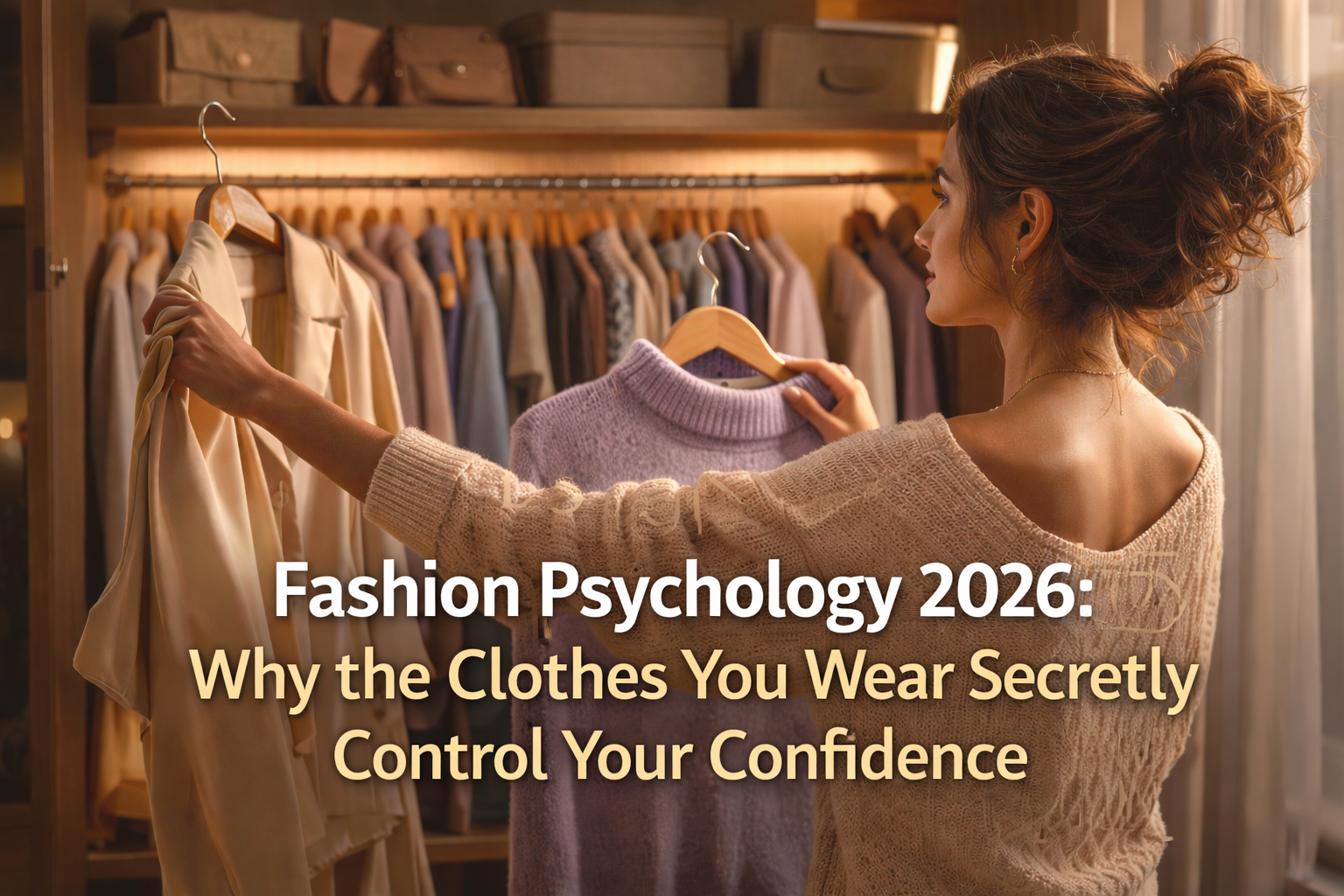
Fashion psychology 2026 is becoming one of the most fascinating discussions in the modern style world. Fashion is no longer just about looking good — it’s about feeling powerful, expressing identity, and even controlling emotions.
Many people believe clothing is simply fabric stitched into designs. But psychology experts say something completely different. The clothes we choose often reveal our hidden personality traits, emotional state, and even subconscious desires.
In 2026, fashion is evolving beyond trends and seasonal collections. It is becoming a language of identity.
When someone chooses an oversized jacket, minimalistic outfit, or bold neon colors, they may not realize it — but their mind is communicating something deeper.
Understanding fashion psychology 2026 helps explain why certain outfits instantly boost confidence while others make us feel uncomfortable.
Let’s explore the hidden emotional power behind the clothes people wear today.
The Hidden Psychology Behind Fashion Choices
One of the biggest ideas in fashion psychology 2026 is that clothing acts like an emotional amplifier.
People often dress according to how they feel inside.
For example:
Someone feeling powerful might choose structured outfits like blazers or tailored suits.
Someone seeking comfort might wear soft oversized sweaters or relaxed streetwear.
Meanwhile, people looking for attention may choose bold colors or statement pieces.
Fashion psychologists call this concept “enclothed cognition.”
This means the clothes you wear can actually influence how your brain behaves.
A famous psychological experiment found that people wearing professional clothing performed better in concentration tasks compared to those wearing casual clothing.
This proves fashion is not only visual — it affects mental performance and confidence.
Why Clothing Has Become an Emotional Language
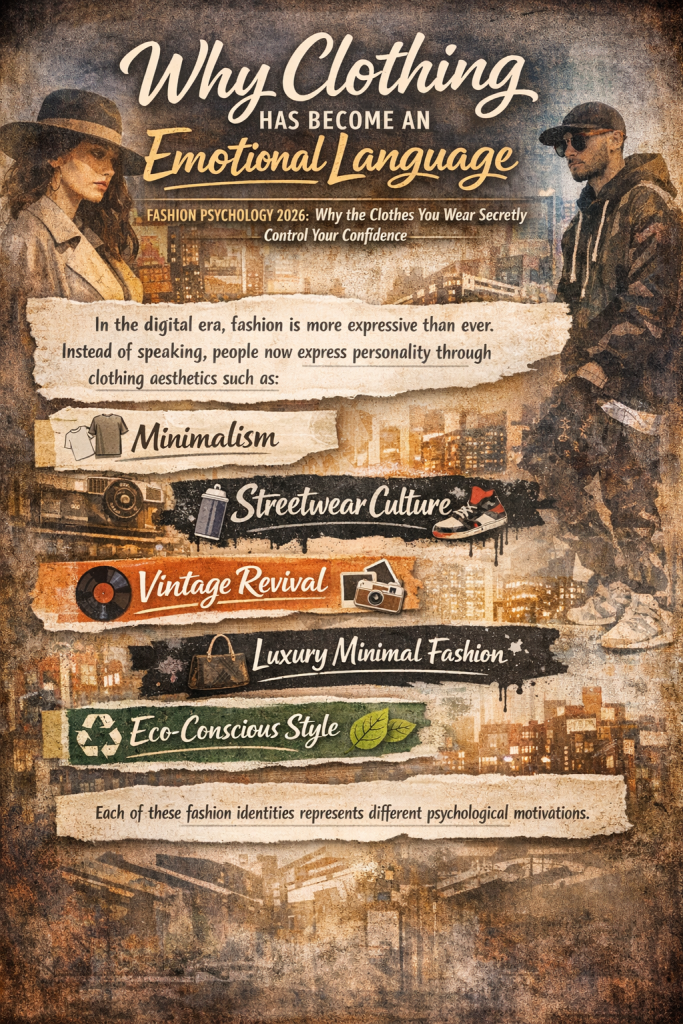
In the digital era, fashion is more expressive than ever.
Social media platforms have changed how people present themselves to the world.
Instead of speaking, people now express personality through clothing aesthetics such as:
Minimalism
Streetwear culture
Vintage revival
Luxury minimal fashion
Eco-conscious style
Each of these fashion identities represents different psychological motivations.
For example:
Minimal fashion often reflects a desire for simplicity and mental clarity.
Streetwear culture is connected to youth rebellion and creativity.
Vintage fashion reflects nostalgia and appreciation for history.
These deeper meanings explain why fashion psychology 2026 is becoming an important topic among designers and cultural researchers.
Fashion today is not just style — it’s self storytelling.
The Rise of Identity-Driven Fashion in 2026
One of the biggest trends within fashion psychology 2026 is identity-driven clothing.
People are no longer dressing simply to follow trends. Instead, they dress to express their values, beliefs, and lifestyle.
Three major identity fashion movements are shaping 2026:
Personal Branding Fashion
People now dress the same way brands market themselves.
Clothing becomes a personal brand identity.
Entrepreneurs often wear clean minimal fashion, while creatives may choose experimental designs.
Emotional Comfort Fashion
Comfort-focused clothing is dominating wardrobes worldwide.
Soft fabrics, relaxed silhouettes, and calm color palettes help reduce stress and improve mood.
Sustainable Identity Fashion
Many individuals now wear clothing that reflects environmental awareness.
Eco-friendly fabrics, recycled materials, and ethical brands have become symbols of responsibility.
These movements prove fashion is becoming deeply connected to values and emotions.
How Clothing Directly Affects Your Confidence
Confidence is one of the strongest psychological effects of clothing.
Many people have experienced the feeling of wearing an outfit that instantly boosts their confidence.
This is a central idea in fashion psychology 2026.
Clothing influences confidence through three main factors:
Visual Self-Perception
When people see themselves looking good, their brain releases positive emotions.
Social Feedback
Compliments from others reinforce confidence and emotional satisfaction.
Mental Association
Certain clothes remind people of powerful memories like successful meetings or special events.
Because of this, psychologists often recommend building a confidence wardrobe — clothing that makes you feel strong and comfortable.
Why Fashion Trends Spread So Quickly
Another fascinating aspect of fashion psychology 2026 is how trends spread globally within days.
This happens due to a psychological phenomenon called social proof.
When people see influencers or celebrities wearing certain styles, they subconsciously perceive those styles as desirable.
Social media platforms amplify this effect dramatically.
A single viral outfit can influence millions of fashion choices worldwide.
However, the most successful fashion trends are not random.
They usually connect with emotional themes like:
Freedom
Rebellion
Luxury
Comfort
Confidence
When a trend reflects emotional needs, it spreads rapidly.
The Future of Fashion Psychology
Fashion experts believe the next decade will transform clothing into an even deeper psychological experience.
Emerging innovations may include:
Mood-responsive fabrics that change color based on emotion.
AI-assisted styling apps that analyze personality traits.
Virtual fashion for digital identity in online worlds.
These developments suggest that fashion psychology 2026 is only the beginning of a much bigger cultural shift.
Clothing will become a tool not just for style, but for mental wellbeing and self-expression.
Final Thoughts
Fashion has always been part of human culture, but today it carries far deeper meaning.
Through the lens of fashion psychology 2026, clothing becomes a mirror of emotions, identity, and personal confidence.
The outfits people choose every morning may seem like simple decisions, yet they reveal powerful psychological patterns.
Understanding this connection allows individuals to use fashion intentionally — not just to look better, but to feel stronger, happier, and more authentic.
In the future, fashion will continue evolving into one of the most powerful forms of human expression.