
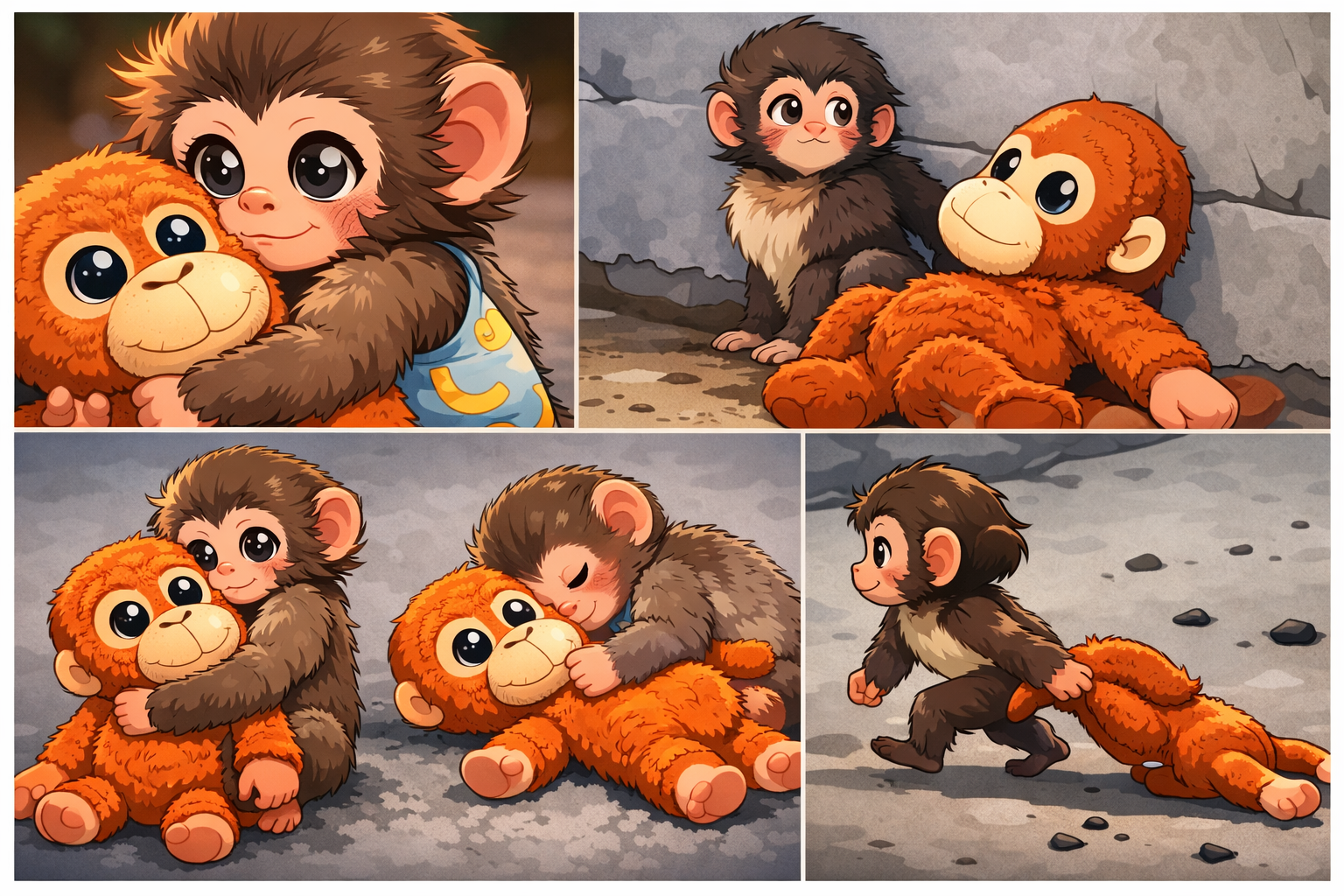
In the fast-moving world of social media, few animal stories manage to stop millions of people in their tracks. But the story of viral baby monkey Punch did exactly that. A tiny infant clinging to a stuffed toy after being rejected by his mother became one of the most emotional and widely shared animal moments online.
Punch, a young Japanese macaque, was born at Ichikawa City Zoo in Japan. What happened in the weeks after his birth turned him into a global symbol of vulnerability, resilience, and hope.
Here are five heartbreaking — yet powerful — facts about viral baby monkey Punch and the plush toy that comforted him.
1. Viral baby monkey punch Was Rejected by His Mother Shortly After Birth
One of the most difficult realities in the animal kingdom is maternal rejection. While it may seem shocking to human observers, rejection sometimes happens among primates due to stress, inexperience, illness, or environmental factors.
Shortly after Punch was born, his mother refused to nurse or carry him. Without intervention, newborn macaques cannot survive on their own. Zoo staff quickly stepped in to ensure he received proper nutrition and warmth.
For many viewers online, this initial rejection was the most heartbreaking part of the story. Seeing such a small and fragile infant without maternal care triggered a deep emotional response worldwide.
2. A Plush Orangutan Became His Source of Comfort
To help ease Punch’s distress, caretakers introduced a stuffed orangutan toy into his enclosure. The soft plush quickly became his constant companion.
Videos show Punch tightly hugging the toy, pressing his face into it, and carrying it wherever he moved. In some clips, he appears to cling to it the way an infant monkey would normally cling to its mother’s fur.
Comfort objects are not uncommon in situations where young animals are hand-raised. Soft items can provide tactile reassurance and reduce anxiety. While a toy cannot replace maternal bonding, it can help stabilize stress levels during early development.
The image of Punch hugging the stuffed animal became the defining visual of his story — one that resonated deeply with viewers across cultures.
3. Social Media Turned Him Into a Global Sensation
Punch’s story spread rapidly across platforms like TikTok, Instagram, and X (formerly Twitter). Within days, clips of the baby monkey gathered millions of views.
Hashtags supporting Punch began trending. Comment sections filled with emotional reactions, heart emojis, and messages of encouragement. Many viewers described crying after watching the videos.
Animal stories often go viral, but Punch’s situation struck a particularly powerful chord. The universal themes of abandonment, comfort, and resilience made the footage relatable far beyond its original setting in Japan.
For some, the plush toy symbolized hope. For others, it highlighted the emotional intelligence of primates and their deep need for connection.
4. Experts Say Infant Primates Need Strong Social Bonds
Primatologists explain that species like Japanese macaques rely heavily on early maternal bonding. In the wild, infants cling to their mothers for warmth, safety, and learning opportunities.
Early separation can create developmental challenges, especially in social species. That’s why zoos and wildlife centers carefully monitor rejected infants and often implement structured integration plans to help them bond with other members of the troop.
The good news in Punch’s case is that hand-raising does not necessarily prevent future social integration. With proper care and gradual introduction, young macaques can form bonds with other monkeys.
Zoo staff have been closely supervising Punch’s interactions to ensure he develops appropriate social behaviors.
5. There Are Signs of Hope in Punch’s Journey
Although early videos showed moments where other monkeys appeared to ignore him, more recent updates suggest positive progress.
Observers have reported instances of adult macaques allowing closer contact. Grooming behaviors — a key sign of social acceptance among primates — have reportedly begun to occur.
These small but meaningful interactions represent important milestones in Punch’s development. Social grooming strengthens bonds and signals belonging within the troop.
For supporters around the world, these updates offer reassurance that Punch’s story is not only about heartbreak — it is also about healing.
Why the Story of Viral Baby Monkey Punch Matters
Punch’s journey highlights several broader conversations beyond social media emotion.
Animal Welfare in Zoos
Modern zoos often play complex roles in conservation, research, and education. Stories like Punch’s invite discussion about how facilities handle maternal rejection and infant care.
Emotional Intelligence in Animals
The strong global reaction to Punch’s behavior reflects a growing awareness that animals experience stress, attachment, and comfort in ways that feel strikingly familiar to humans.
The Power of Digital Empathy
In an online world often dominated by conflict and controversy, Punch’s story united millions in shared compassion. For a brief moment, people across different countries focused on supporting a vulnerable baby animal.
A Symbol of Resilience
What makes viral baby monkey Punch’s story so compelling is not just the sadness — it’s the resilience.
Despite being rejected at birth, Punch survived because of human intervention and careful monitoring. Despite early isolation, he is gradually learning to socialize. And despite his small size, he managed to touch millions of hearts worldwide.
The sight of him hugging a plush toy may have sparked the initial wave of attention, but it is his steady progress that keeps people invested.
Punch reminds us that vulnerability does not mean weakness. Sometimes, even the smallest creatures can inspire enormous empathy.
As updates continue from Ichikawa City Zoo, many around the world will be watching — hoping that this once-rejected infant grows into a fully integrated member of his troop.
For now, viral baby monkey Punch remains a powerful example of how compassion, care, and resilience can transform even the most heartbreaking beginning into a hopeful future.